
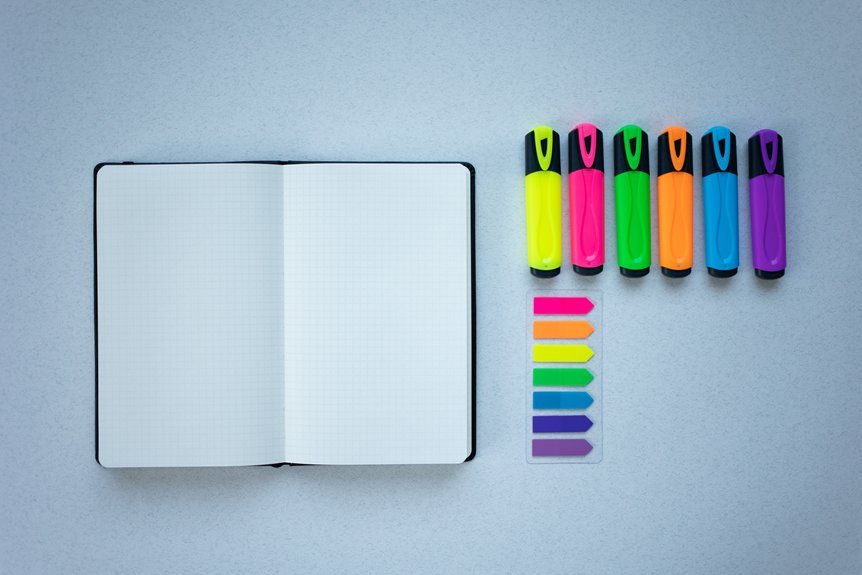
If you want journal markers that make every page pop, I’d start with the picks I’ve used for real spreads and daily notes.
Zebra MILDLINER feels smooth on the page and lays down soft pastel color with a dry clean finish. Think of it as the calm friend in a loud room.
For bright writing I keep reaching for Paper Mate Flair. The tip glides with a soft scratch sound and the ink looks bold right away. You get vivid lines that make headers and lists stand out.
Need more flair? I’ve had fun with TANMIT dual tip brush pens for brush lettering and small details. The brush tip bends with light pressure and the fine tip adds control. It’s like having two tools in one pocket.
For clean layouts I trust iBayam fineliners. They feel light in hand and give you crisp lines that stay sharp. Your planner pages look tidy and polished.
Here’s what I’d check before you buy:
- Tip style, chisel brush or fine point
- Dry time, fast ink helps keep pages neat
- Paper feel, smooth paper changes how ink sits
- Bleed control, great for journals and planners
Pick the one that fits your page style and writing habits. Do that and your journal will sing.
Zebra Pen MILDLINER No Bleed Highlighter, Assorted Colors, Dual Tip, 15-Pk
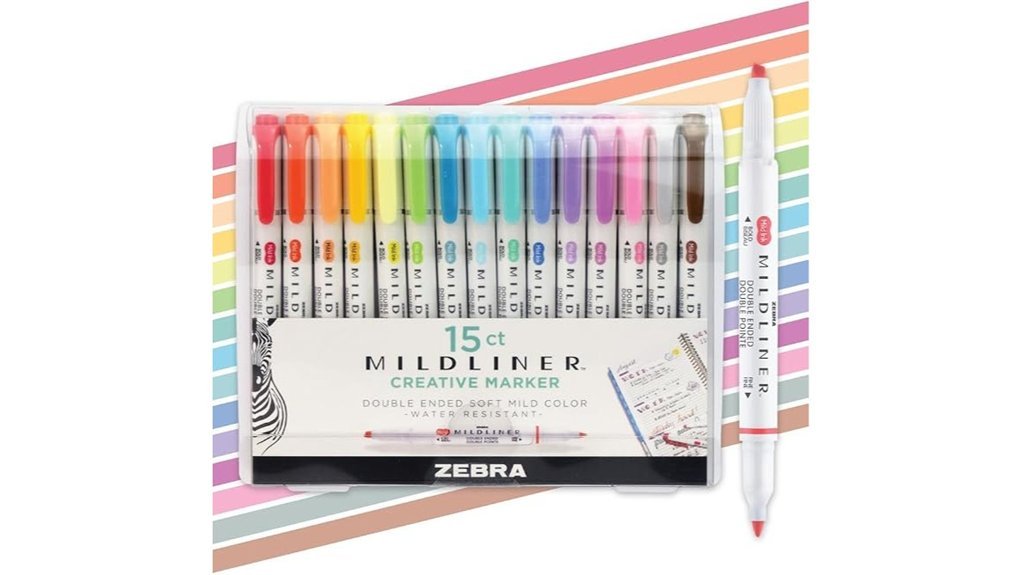
If you want clean journal markers, I’d grab the Zebra Pen MILDLINER No Bleed Highlighter 15 Pack. I’ve used these on planners, study sheets, and Bible pages. They feel smooth in the hand and the caps snap shut with a crisp click. The colors look soft and calm, like a pastel sunrise.
You get 15 assorted colors and two tips on each pen. One tip lays down broad highlight strokes. The other tip adds fine notes and small details. That combo hits the sweet spot.
The no bleed ink shines on thin paper. I saw clean marks on planner pages and light notebook stock. That makes these a great fit for journaling, note taking, and scripture study. Smooth sailing.
Once the ink dries, the water resistant pigment ink holds its shape well. I layered colors with solid results. The page stayed neat and the lines stayed clear. The finish feels dry to the touch and tidy on the page.
Small details help too. Color coded clips make the set easy to sort fast. The non toxic formula is AP certified, so you can hand them to kids or keep them in your work bag with confidence. These pens smell mild and clean, which I always appreciate.
Best For: Students, teachers, planners, and journal fans who want *soft color dual tip highlighters* for thin paper.
Pros:
- Dual tip design gives you a chisel tip for highlighting and a bullet tip for notes and detail work.
- No bleed ink works well on thin pages and supports neat layering after dry time.
- 15 mild colors add variety and the clips make storage easy.
Cons:
- Soft tones suit users who like subtle color more than bright pop.
- Dry time matters if you plan to layer shades right away.
- 15 pens fit best if you want a full set instead of a few basics.
Paper Mate Flair Felt Tip Pens (12 Count)
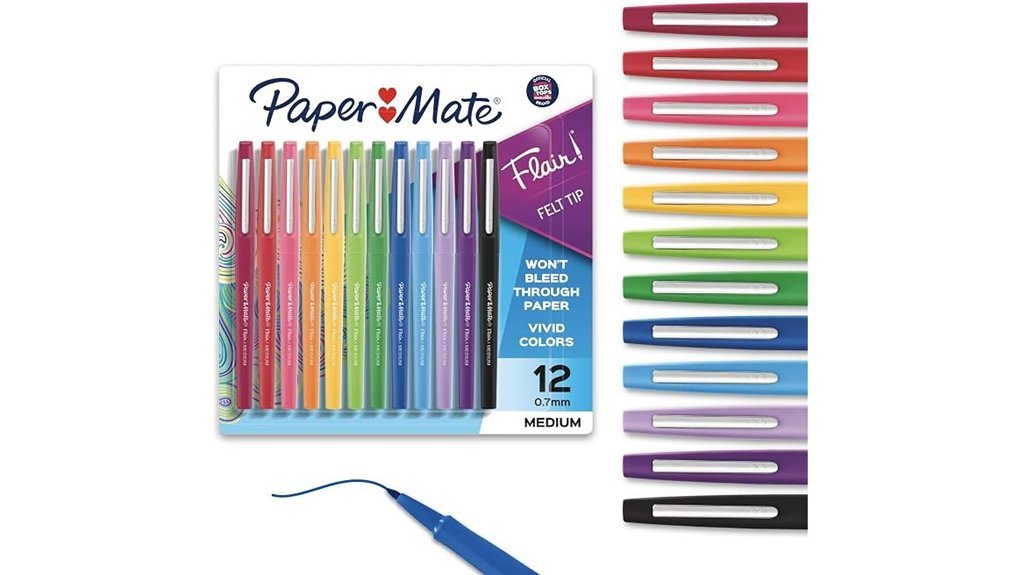
Paper Mate Flair Felt Tip Pens work great for journaling when you want bold color and clean pages. I’ve used them for headers, lists, and daily notes. They feel light in the hand. The tip glides like a skater on fresh ice.
You get 12 assorted colors with a medium 0.7mm felt tip. That point lays down clear lines with a soft drag that feels satisfying on paper. The water based ink dries fast and stays bright. Pages keep that crisp look over time.
I also like the point guard. It helps the tip keep its shape after lots of writing. That matters if you journal every day. At school or work these pens keep up without fuss.
The color range adds fun to planners, study notes, and craft pages. Teachers love them for a reason. They write with a gentle whisper across the page. Amazon’s 30 day return guarantee adds extra peace of mind.
Best For: Journalers, students, teachers, and anyone who wants *bold colorful writing* with clean results for notes, planners, and crafts.
Why you might like it
- 0.7mm medium tip, great for bold lines, headers, and everyday writing
- Water based ink, smear proof, fade resistant, and made for minimal bleed through
- Point guard, helps the felt tip stay firm with frequent use
- 12 assorted colors, handy for color coding, journaling, and classroom work
A few things to know
- The medium tip suits bold writing best
- Heavy users may want more than 12 pens
- These pens shine most on standard paper for notes and journals
Quick take: If you want felt tip pens for journaling and note taking, these hit the sweet spot. You get bright color, smooth flow, and a tip that holds up. That’s the whole ball game.
Amazon Basics Felt Tip Marker Pens (12-Pack)
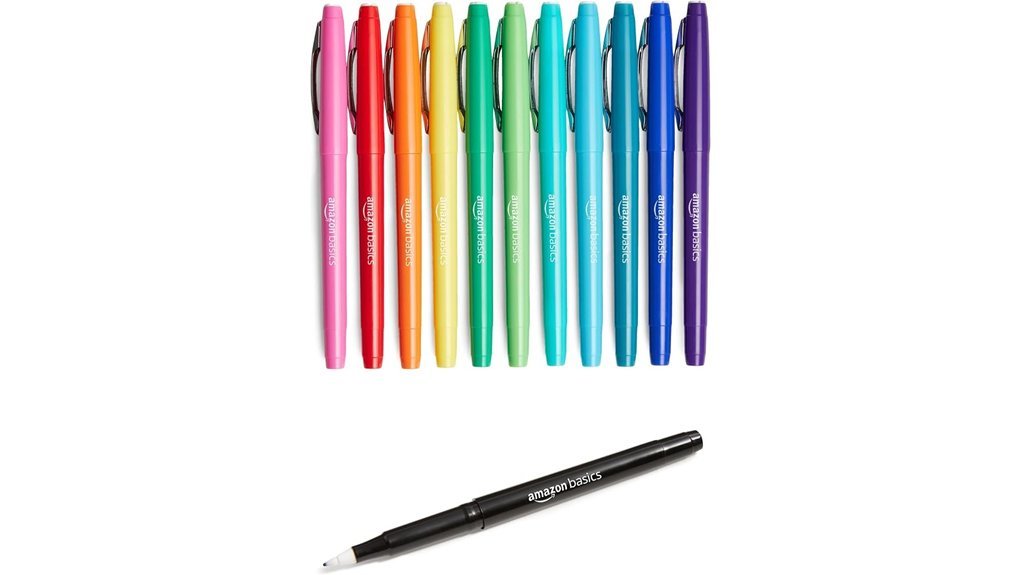
Amazon Basics Felt Tip Marker Pens fit you well if you want *low cost color* and clean lines. I’ve used them for journal spreads and quick notes. They feel like a solid everyday pick. No bells and whistles, just steady work.
You get 12 assorted colors for journaling, drawing, writing, and color coding. That range covers the basics without turning your desk into a circus. If you like visual order, these pens make page layouts feel simple and fast.
The felt tip lays down a medium line with good control. I found it smooth on paper with a soft drag you can feel in your hand. Headers pop. Small details stay clear. That balance hits the sweet spot.
The water based ink looks bright and dries with a clean finish. I noticed very little smear during normal use. There’s a faint marker smell, though it stays mild. Think of it as a light tap on the shoulder.
The plastic barrels feel sturdy and easy to grip. Caps match the ink color, which saves time. The metal clip adds grab and go convenience. Toss them in a pouch and you’re set.
Best For:
Journalers, students, and casual creatives who want an affordable 12 color felt tip pen set for writing, sketching, and note organization.
Pros:
- 12 colors support journaling, school notes, art projects, and planner layouts
- Medium felt tip creates bold lines and clear detail with smooth control
- Smear resistant ink stays vibrant and the clip caps help with storage
Cons:
- Medium tip suits bold writing more than extra tiny lettering
- 12 shades cover core needs and leave room for bigger color sets
- Water based ink works best for paper projects and everyday use
TANMIT 36 Dual-Tip Brush Pens, Art Markers for Adult Coloring Books
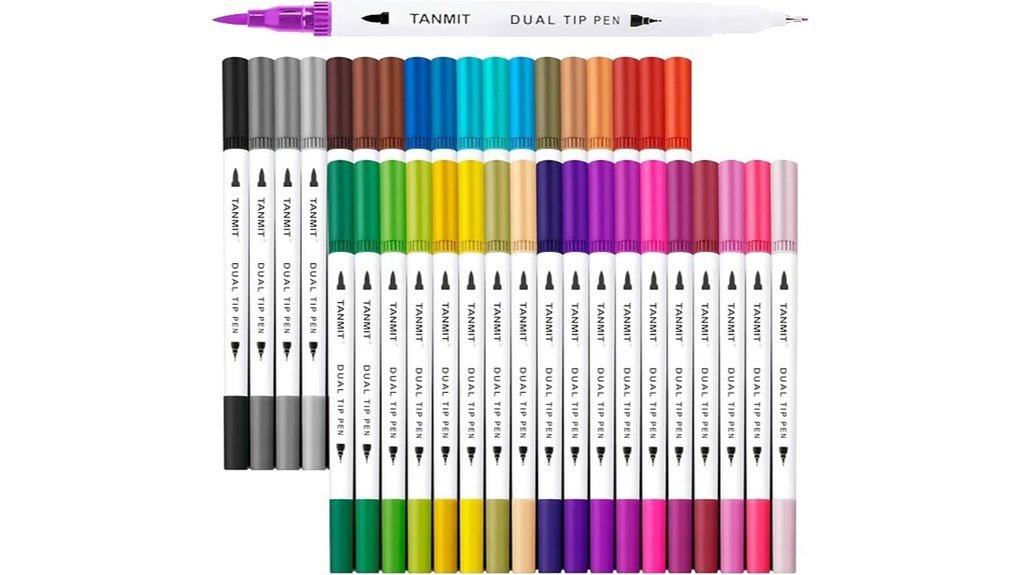
TANMIT 36 Dual Tip Brush Pens fit right into your journal kit. I’ve used them for headers, color blocks, and tiny page accents. They feel like a Swiss Army knife for paper.
You get two tips in one pen. The brush tip gives you soft flex and smooth color. The fine tip lays down clean lines for boxes, notes, and doodles. I felt steady control in hand and the barrels stayed light during longer sessions.
The 36 colors look bright on the page. They add life to planners, bullet journals, and adult coloring books. The ink goes down with a smooth glide and leaves that faint fresh marker smell you’d expect from new art pens.
I liked the quick drying water based ink most. Pages stayed cleaner and my hand picked up less smear. On standard journal paper the show through stayed fairly light, which is music to my ears.
The case keeps the set easy to grab and carry. You can toss it in a backpack or desk drawer and go. For school projects or casual art time it hits the sweet spot.
*Best For:* Journalers, students, artists, and creative kids who want dual tip brush pens for planning, doodling, coloring, and detail work on standard paper.
Pros:
- Dual tips give you brush lettering on one side and fine line detail on the other.
- 36 vibrant colors add solid variety for bullet journaling, planners, and coloring pages.
- Water based ink dries fast and helps keep smears and bleed through low.
- Portable case makes storage simple and travel easy.
Cons:
- 36 shades suit most users though avid artists may want more color depth.
- Water based markers work best for light layering and simple blends.
- Tips soften over time with frequent heavy use.
Technical Specs:
- Tip sizes: 1 to 2 mm brush tip, 0.4 mm fine tip
- Ink type: Water based ink
- Set size: 36 colors
- Use cases: Bullet journal, planner, adult coloring books, school projects, doodling, note taking
If you want brush pens for journaling that stay easy to use and fun on standard paper, this set does the job. I’d call it a smart pick for everyday creativity.
iBayam Journal Planner Fineliner Pens Fine Point 0.38mm, Cute School Office
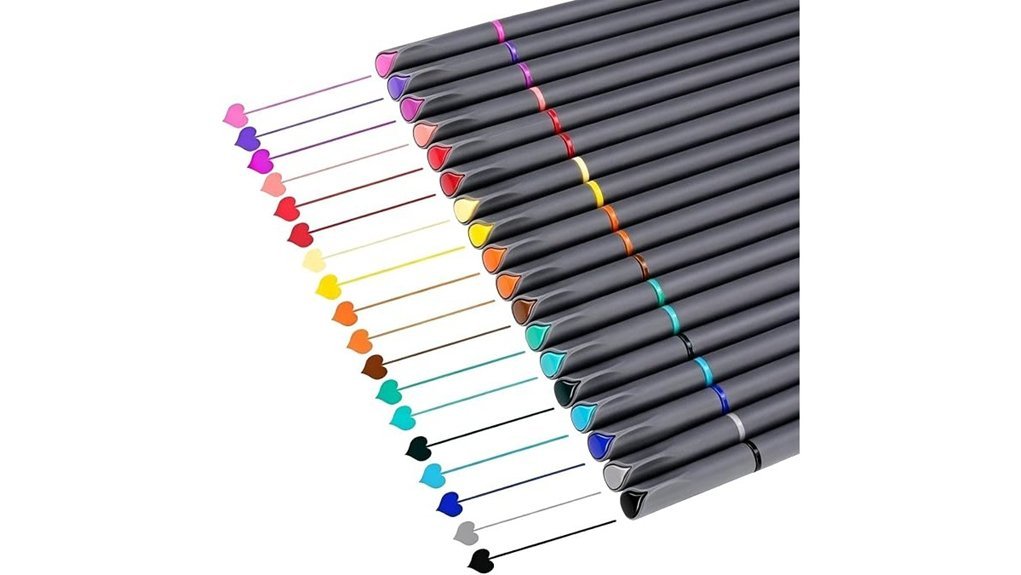
If you want clean journal lines with a pop of color, I’d grab the iBayam 0.38mm fineliner pens. I’ve used sets like this for planner pages and class notes. They lay down a thin line that feels sharp as a tack.
These pens give you 18 colors for journaling, note taking, doodling, and planner spreads. The fine metal clad tip keeps strokes crisp. The water based ink glides with a soft feel and a faint marker smell.
For bullet journals, these shine. You can write tiny headers, mark habit trackers, and add small doodles without crowding the page. That makes them a strong pick for school, office, and planner use. *Small tip, big payoff.*
They also feel good in hand. The barrel stays light and smooth during long writing sessions. You’ll hear a gentle scratch on paper, which I actually like because it helps with control.
What you get
- 18 unique colors
- 0.38mm fine point
- Water based ink
- Metal clad pen tip
- Transparent vinyl bag
- Plastic storage case with snap closure
Best for
- Students
- Journal lovers
- Planner fans
- Color coding notes
- Fine line drawing
- Calendar layouts
Pros
- Crisp fine lines make writing and doodles look neat
- Color variety adds fun to notes and planner pages
- Smooth ink flow keeps everyday paper looking clean
- Case and bag make storage easy, a cherry on top
Cons
- The extra fine tip suits people who enjoy a very slim line
- Water based ink fits paper projects best
- The full 18 color set serves people who love lots of shades
If you want cute school office pens that handle journaling with precision, this set earns a spot on your desk. I think they work best for people who love tidy pages and colorful organization.
Factors to Consider When Choosing Markers for a Journal
I’ve tested a pile of journal markers, and a few features always rise to the top. Tip style matters first. Fine tips feel crisp on the page. Brush tips glide with a soft sweep. Chisel tips bring bold lines and quick headers. *Pick the tip that fits your writing style.*
Next, check ink bleed resistance. Good marker ink stays put. It won’t soak through thin journal paper or leave ghosting on the next page. I also look at the color range. Rich blacks look clean. Soft pastels add calm. Bright shades pop like a fresh coat of paint.
Dry time counts too. Fast drying ink keeps your page smooth and your fingers clean. You can hear that quick scratch across the paper, then turn the page with confidence. Smudge free writing feels better.
Last, match the marker to your journal paper quality. Some pages feel silky. Others feel rough and thirsty. I’ve found that the best journal markers sit on the paper well and leave sharp neat lines.
What to check before you buy:
- Tip style
- Bleed resistance
- Color selection
- Fast drying ink
- Paper compatibility
Choose well, and your journal pages will sing.
Tip Style Options
Tip Style Options
I’ve tested marker tips on slick planner paper and rough poster board. Tip choice shapes every mark you make. *Pick the tip for the job.*
A broad chisel tip covers space fast. It feels smooth on the page and lays down bold color with a soft drag. Use it for headings or big blocks of fill. It’s the workhorse of the bunch.
A fine bullet tip gives you clean writing and crisp detail. You’ll feel more control at the point. I reach for it when I label notes or tighten small lines. Like a scalpel for paper.
Want more range. Choose dual tip markers. You get a brush tip for flowing strokes and a fine tip for sharp accents. I like that quick switch in real use. It saves time and keeps your rhythm.
Point size matters too. Small changes show up fast on the page.
- 0.38 mm tips suit neat lettering and tiny details
- 0.7 mm tips create bolder lines and stronger emphasis
- No fray tips hold their shape longer and keep strokes steady
Tip build affects ink flow as well. A firmer tip feels snappy and controlled. A softer tip glides with more give. If you want steady lines and a clean look choose a tip that matches your hand pressure. The right one fits like a glove.
Ink Bleed Resistance
Thin journal paper can feel like a minefield. I’ve tested plenty of pens and markers on soft pages that crinkle under your hand. Ink bleed resistance belongs at the top of your checklist.
You want crisp lines. You want clean spreads. You want both sides of the page to stay useful. That’s the whole ball game.
Look for markers labeled *non bleed* or *no bleed*. Those picks treat delicate paper with a lighter touch. You’ll see less soak through and fewer ghost marks on the next sheet.
In my tests, water based ink usually performs best on journal paper. It feels lighter on the page and dries with a smooth finish. You also get solid control for:
- hand lettering
- daily notes
- doodles
- mild layering
- color accents
Some inks behave like they own the place. Alcohol based ink and many permanent formulas sink deeper into thin paper. That can leave dark shadows and limit double sided use.
I always do a quick test first. Try the marker on a back page or a scrap piece from your journal. You’ll feel the paper texture right away and see how fast the ink settles.
That tiny test saves pages. It also saves your mood, and trust me, your future self will thank you.
Color Range Available
Color Range Available
I’ve found that color range sets the mood fast. It can make a journal spread feel calm, bold, or playful in seconds.
More shades give you more control. You can mark tasks, track habits, and sort ideas at a glance. That saves time and keeps your layout clean.
I always look for sets with:
- Bright colors for headers and callouts
- *Soft pastels* for gentle themes and light notes
- Mid tones for balance and contrast
That mix gives you room to play. It also helps your pages feel fresh instead of same old same old.
A larger marker set also improves layering. You can stack shades for richer titles and better doodles. I notice this most when the ink glides smooth and the tip feels soft on paper. There’s a quiet scratch on the page that just feels satisfying.
If you use a bullet journal, planner, or study notebook, extra colors help a lot. You can build a clear color coding system and spot key details fast. That makes your journal more useful and more fun to open.
More variety also sparks ideas. I’ve seen wider palettes pull me back in like a moth to a porch light. More color options often mean more creative energy. And that keeps you coming back to the page.
Drying Time Speed
Drying Time Speed
I’ve tested plenty of journal markers, and drying time can make or break your page. Wet ink feels slick to the touch. It can drag under your hand like a banana peel.
Fast drying markers usually set in a few seconds. That makes them great for:
- quick journaling
- class notes
- color coding
- layered layouts
If you write at speed, you’ll love that crisp finish. The page stays clean. Your highlights stay sharp. Your decorative lines keep their shape.
Water based ink often needs a bit more time. You may see a slight shine before it dries. I always watch that surface change from glossy to flat. That tiny cue tells you the ink has set.
Slower drying markers can still look beautiful. Colors often appear rich and smooth. You just need a lighter touch and a little patience. Think of it as letting paint breathe.
Before you buy a full set, test each marker on a sheet from your journal. Paper texture changes everything. Some pages feel smooth like satin. Others grab ink fast and dry it quicker.
Try this simple test:
- make one swipe
- wait a few seconds
- run your finger nearby
- check for smudge marks
- compare colors and tip styles
That quick check helps you pick journal markers that match your pace. *Clean pages matter.* Dry time matters more.
Paper Compatibility
Paper finish shapes your results. I’ve tested markers on slick sheets and toothy pages. You feel the difference fast.
Smooth paper feels slick under the tip. The marker glides like butter. Colors look brighter and cleaner too.
Textured paper grabs the nib. You can hear a faint scratch as you write. Strokes look softer and less even. Some inks also sink in faster.
Test before you fill a page. Try each marker on a paper sample that matches your journal. That quick swatch tells you a lot.
Look for:
- Drying time
- Bleed through
- Feathering
- Color payoff
- Tip feel
I always check markers labeled for paper use or journaling. Their inks usually cling better to the page. You get more control and less mess. That’s the *proof in the pudding*.
Comfort And Grip
Comfort and Grip
I’ve learned this the hard way. Comfort can make or break a long journaling session. A good marker lets you write for pages while your hand stays relaxed. Your lines look smoother too. Your lettering stays crisp. *That’s half the battle.*
Grip plays a big role here. If the barrel feels slick, you’ll notice it fast. Your fingers slide. Control drops. A soft rubber grip feels better to the touch and helps the marker stay put. That extra hold can make brush lettering and daily journaling feel much cleaner.
Before you buy, check these comfort features:
- Rubberized grip, better traction for sweaty or dry fingers
- Barrel size, wider barrels often feel easier during long writing sessions
- Shape, triangular and tapered bodies can fit your hand more naturally
- Weight, light markers move fast while heavier ones can feel steadier
I also pay close attention to balance. Some markers feel feather light. Others carry a bit more heft and give a solid feel on the page. You can even hear a faint tap as a firmer barrel lands on your desk. Small detail. Big difference.
If you can, test a few in your hand first. Hold them. Scribble a line. See what feels smooth and easy. The best journal marker should feel like an extension of your hand.
Intended Journal Use
Every journal needs a clear role. I’ve found that the best markers for journaling depend on how you use the page.
If you write notes or daily plans, pick markers with clean ink flow. Smooth lines matter. Fast drying ink feels like a small win. You write, flip the page, and keep moving. Water based ink works well here. It dries fast and keeps the page crisp.
For art journals, color takes center stage. Think bright shades and flexible tips. A brush tip glides with a soft drag. A fine tip adds sharp detail. It’s a *two birds with one stone* setup. You get bold fills and precise lines in one marker.
Thin paper needs extra care. I’ve seen cheap ink soak through and leave pages feeling rough to the touch. Choose no bleed markers for better paper safety.
If you layer colors or write on both sides, look for:
- Smear resistant ink
- Quick dry performance
- Minimal ghosting
- Dual tip design
Good marker matching makes a big difference. Your pages look cleaner. Your journal lasts longer. And yes, your hands stay free of that faint ink smell by the end of the session.
Conclusion
Choosing the best markers for journals starts with the feel you want on the page. Clean lines. Bright color. Bold headers. Loose expressive strokes. I’ve tested highlighters, fineliners, and brush pens across thick paper and thin pages, and the right pick makes your journal *look better* and *work harder*.
Some markers glide like butter. Others give crisp feedback with a soft scratch you can hear as you write. A good set keeps colors vivid, the tips smooth, and the ink smell light enough for long sessions. That matters when you spend real time with your notebook.
Color also helps your brain sort ideas fast. Research shows people recall color coded notes far better than plain black and white pages. So your marker choice does more than dress up the spread. It helps you focus, remember, and create with more clarity every time you open your journal.