
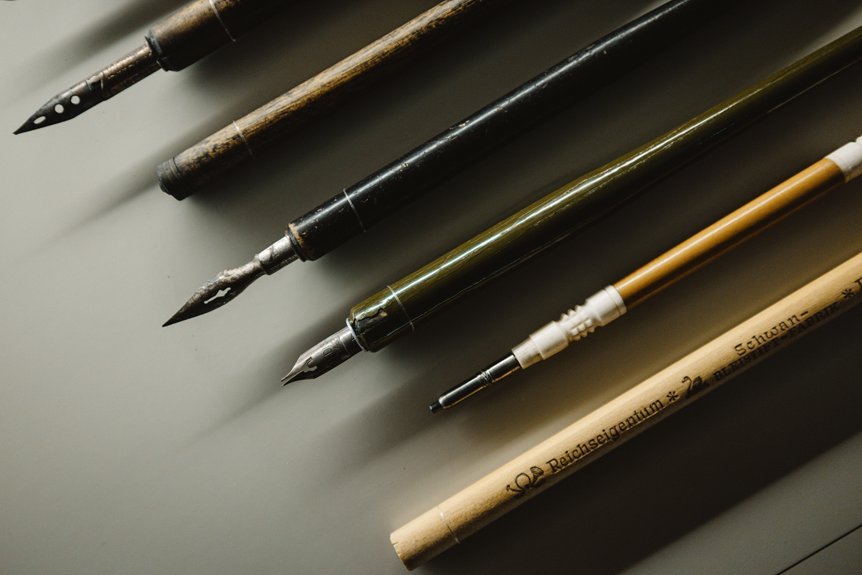
You want crisp dots. You need fineliners with *needle tips* and steady flow. I’ve tested these on smooth Bristol and rough sketch paper. They glide with a soft scratch sound. Ink feels dry to the touch in seconds.
Top picks I trust
- Sakura Pigma Micron
- Archival pigment ink
- Tip sizes from 003 to 08
- Lightfast and waterproof
- GETHPEN fineliners
- Budget friendly sets
- Consistent black ink
- Smooth plastic barrels
- Shuttle Art pens
- Wide size range
- Firm nib feel
- Great starter kits
You get tight control with each tap. Dots stay sharp like pinpricks. No feathering on quality paper. That matters during long sessions.
I grip these for hours. The barrels feel light and balanced. Ink smell stays faint. Your hand stays relaxed.
Pick a mix of tip sizes. Small tips build shadows. Larger tips speed up fills. Think of it as a painter’s brush set.
*The right pen hits the sweet spot.* Your dots land clean. Your shading builds fast. Keep reading and match a set to your style.
Electric Dotspen II Rechargeable Art Pen (Black Knight)
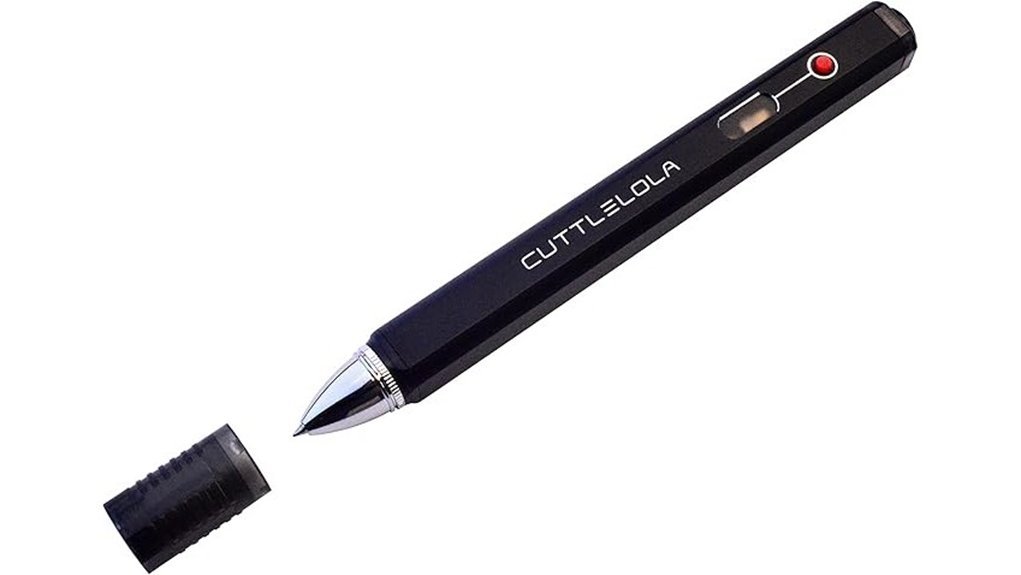
If speed drives your stippling, I reach for the Electric Dotspen II Black Knight. It feels like a tiny tattoo machine in your hand, a soft buzz you can hear. You tap once and it fires dots fast, like rain on glass. I’ve built dense shading in minutes, which used to take ages. You get clean, repeatable marks that keep your texture tight. The aluminum body feels cool and solid. Grip stays steady even after long passes. The black gel ink flows smooth and dries crisp for manga and technical work. A full charge runs about an hour, then you plug in and go again.
Best For: Artists and illustrators and tattooists who want fast, consistent dot work.
Pros:
- *Up to 10x faster dotting* gives you rapid fill and shading
- *Light aluminum body* feels balanced and easy to control
- *Waterproof black gel ink* lays dark lines that hold up
Cons:
- About 1 hour per charge sets your session pace
- Black ink focus keeps your palette simple
- A short learning curve helps your hand sync with the motor
SAKURA Pigma Micron Fineliner Pens 6-Pack Assorted Sizes
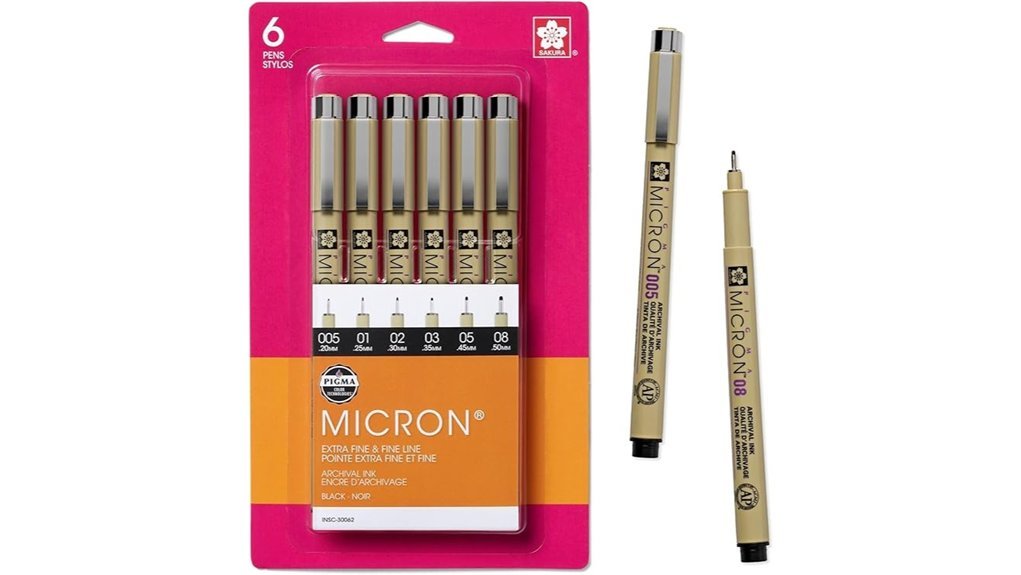
I’ve used these Micron pens on long stippling sessions. They feel like a steady drumbeat on paper. Ink flows smooth and quiet. Lines stay sharp even after layers stack.
You get six tip sizes from 005 to 08. I switch fast as tone builds. Fine tips whisper dots. Bigger tips punch in contrast. It feels like painting with grains of sand.
The *archival ink* looks deep black and dries fast. It smells faint and clean. It resists water and light. Your work stays crisp and *pH neutral* for years.
The barrel sits light in your hand. Grip feels smooth during long hours. No slips. No fatigue. That balance hits like a well tuned instrument.
Why it shines for stippling
Control drives every mark. You place dots with intent. Density builds form. Contrast pops. It all clicks like clockwork.
Best For: Artists and illustrators who want *clean predictable stippling* and professional line work.
Pros:
- *Archival ink flow* stays consistent and rich
- Six sizes give tight control over detail and shading
- Lightweight body supports long sessions with ease
Cons:
- Black ink only in this set
- Tips soften with heavy pressure
- Right hand bias affects some left handed use
Quick Specs:
- Sizes, 005 01 02 03 05 08
- Ink, waterproof pigment
- Certification, AP approved
- Use, manga illustration journaling crafts
Inlumino Heart Ink Wireless Tattoo Practice Pen Kit
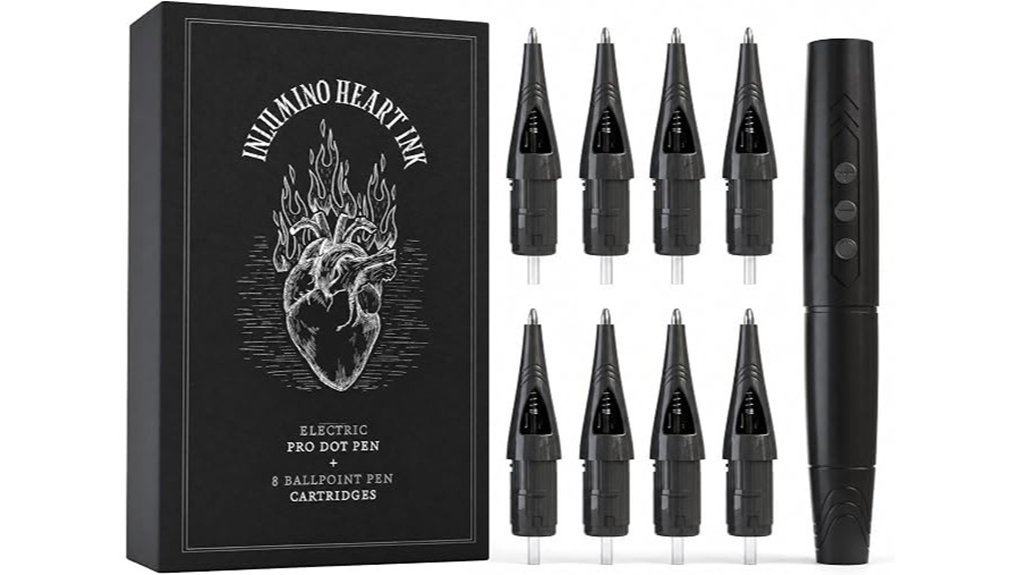
Stippling artists, this pen hits like a steady drumbeat. I tested the Inlumino Heart Ink on paper and the dot output stays tight and even. You feel a soft hum in hand. No splatter. No fuss.
You get a rotary dot pen with wireless control. It suits flash art and dotwork drills. The 0.5mm water based cartridges lay clean dots with smooth density. Each runs about 1.5 hours. I swapped fast and kept pace.
Power stays ready. Two 1200mAh batteries carry long sessions. USB C charging keeps cables simple. The body feels balanced at 145mm and 130g. It sits like a pen you trust. The 3.0mm stroke with 4 to 7.5V lets you tune speed and texture. Think of it like a dimmer for dots. A magnetic case snaps shut with a click.
Best For: You focus on stippling and dotwork practice. You want a clean paper setup with wireless freedom.
Pros:
- Crisp 0.5mm dots with even fill for clean stippling
- Wireless kit with two batteries for long runs
- Clean workflow on paper with zero ink mess
Cons:
- Built for dotwork focus, other styles need a liner pen
- Cartridges run about 1.5 hours, you keep spares handy
- Voltage tops at 7.5V, power range feels focused rather than broad
Quick Specs:
- Stroke, 3.0mm
- Voltage, 4 to 7.5V
- Cartridge tip, 0.5mm water based
- Battery, dual 1200mAh
- Charge, USB C
- Size, 145mm
- Weight, 130g
GETHPEN Micro Fineliner Pen Set, 6 Black
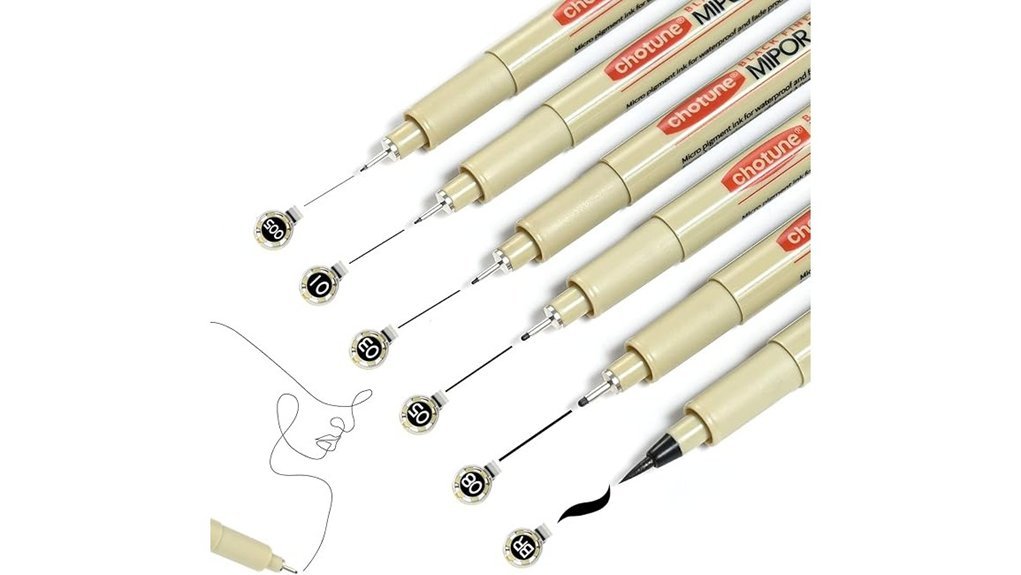
Artists who crave ultra fine control will like this set right away. I tested these on smooth and toothy paper. Each pen feels light in hand. The tip glides with a soft scratch you can hear. Think of it like a needle that dances.
You get six black fineliners plus a brush pen. Sizes run from 0.20mm to 0.55mm. That range lets you build clean stippling density. I stacked dots and lines stayed sharp. Waterproof archival ink dries fast. Your work stays dark and crisp over time.
The stainless steel tips hold their shape well. Lines stay steady even in long sessions. The round barrels feel grippy. My fingers stayed relaxed after an hour. Labeled caps save time like a well tuned kit.
This set fits in a small pouch. It travels like a pocket sketch buddy. If a pen fails you can get a replacement. That adds peace of mind. It’s a beginner friendly reliable choice for drawing journaling and illustration.
Best For:
Beginners and hobby artists who want precise black fineliners for drawing journaling and detailed illustration.
Pros:
- Wide nib range plus a brush pen for line work and lettering
- Waterproof archival ink that dries fast and resists fading
- Comfortable anti slip barrels with clear cap labels
Cons:
- Black ink only so color work needs extra pens
- Very fine nibs suit detail more than bold strokes
- Brush pen feels lighter than a dedicated brush tool
Quick Specs:
- Nib sizes, 0.20mm to 0.55mm
- Ink type, waterproof archival
- Tip material, stainless steel
- Set count, 6 fineliners plus 1 brush pen
If you want clean lines and tight detail this set hits the mark. It feels like using a fine chisel on paper.
Dyvicl Micro-Pen Fineliner Pens Black 9-Pack
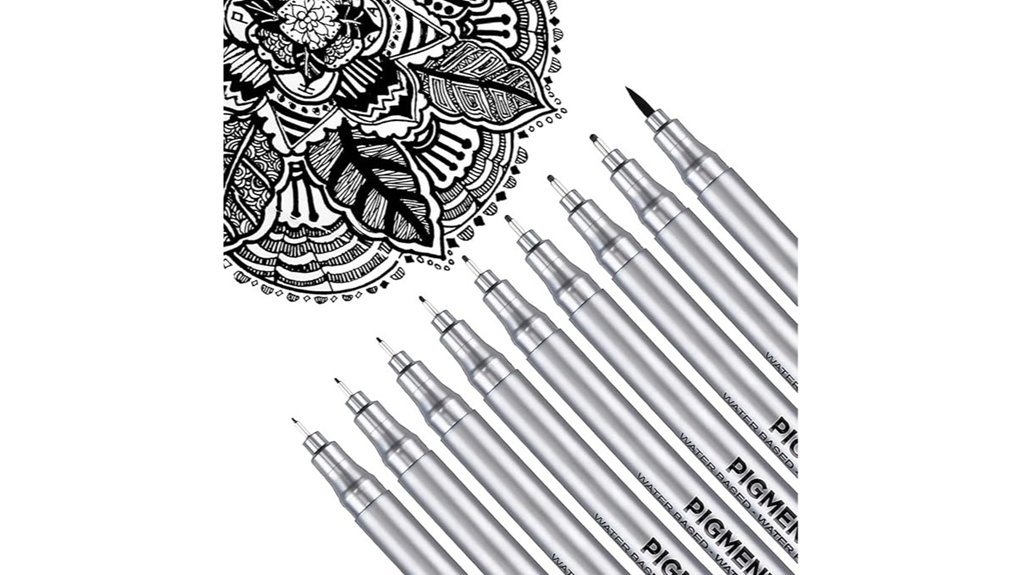
With nine *precise tip sizes* and a *flexible brush*, I get tight control over every dot. It feels like painting with needles. You switch from 0.2 mm to 0.6 mm and build smooth gradients fast. Lines stay clean. Textures pop.
The ink flows smooth and sounds soft on paper. I tested vellum and tracing sheets. Each stroke stayed crisp. *Archival, water resistant ink* keeps marks rich over time. Caps click firm and colors guide quick grabs. The *lightweight nine pack* slips into a soft case and travels easy. It hits like a Swiss Army knife for line work.
Best For: You want sharp control for stippling, sketching, and technical drawing.
Pros:
- 9 nib sizes plus a brush tip for flexible line work
- Smooth ink flow with archival quality and water resistance
- Works across vellum, tracing paper, and standard sketch pads
Cons:
- Black ink only
- Brush tip wears with heavy pressure
- Brand feels less known than premium names
28PCS Wood Burning Brass Tip Set for Pyrography
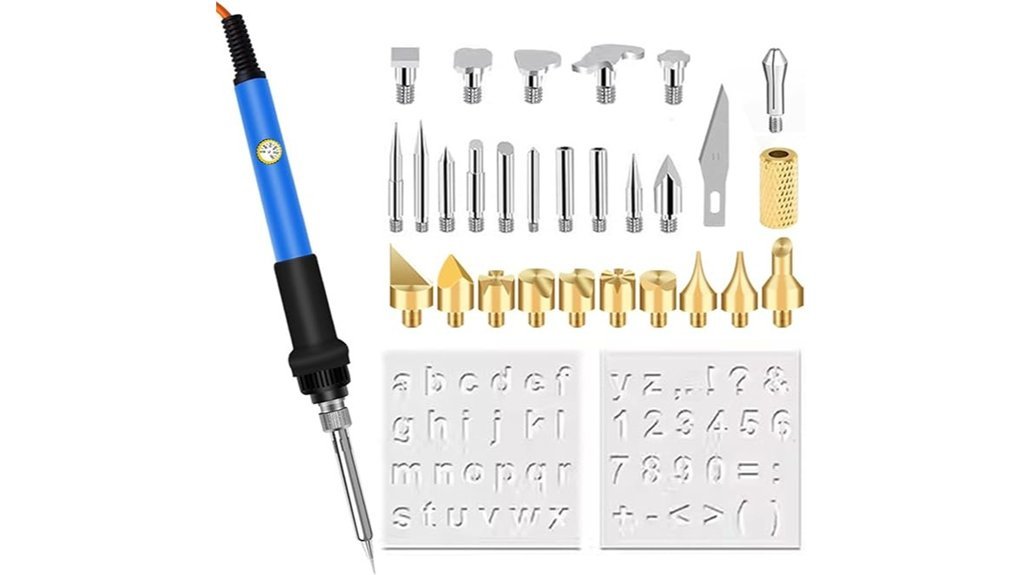
Precision matters here. I felt it right away in my grip. The 28 interchangeable brass tips give you tight control for stippling and fine detail. Each tip glides like a pen on warm wood. You can hear a soft scratch as lines form.
Switch tips fast. You move from clean lines to smooth shading in seconds. Try embossing or textured dots on wood, leather, or cork. It all works like a Swiss army knife for pyrography.
The brass build heats evenly and stays steady. No hot spots. No guesswork. Each tip screws in with a firm twist. It fits most wood burning pens, including Walnut Hollow. I swapped tips mid session with ease. Use pliers for hot tips and keep your fingers safe.
You will find the set easy to pick up. You will also grow into its depth. It feels light in hand and packs small in your kit. This SIXDAWANJIA set expands your range without slowing you down. Think of it as adding new brushes to your art box.
Best For: DIY crafters and hobbyists and pros who want flexible wood burning tips for fine detail and stippling.
Pros:
- 28 tips cover lines, shading, stippling, and embossing
- Brass holds heat well and feels smooth on contact
- Fits most standard thread pens with simple screw in use
Cons:
- Hot tips call for pliers during swaps
- Large set takes time to learn well
- Works with standard thread pens and select models only
Black Micro Pens Set, Waterproof Fine Point Drawing
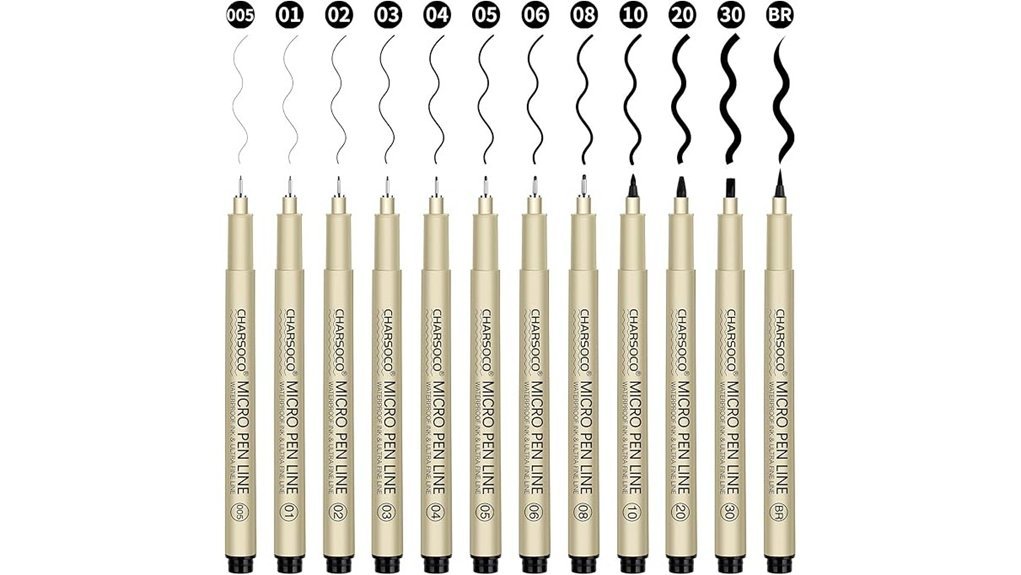
I’ve put these black micro pens through long sketch sessions and tight stipple work. They feel like a steady hand in pen form.
You get 12 tip sizes from 0.23 mm to 5 mm. That range covers hairline dots and bold fills. I switch sizes fast and keep flow smooth. It feels like shifting gears on a bike.
The stainless steel tips glide with a soft scratch on paper. You feel control at every stroke. Lines stay clean and dots land where you aim.
The archival pigment ink dries in seconds. It smells neutral and stays crisp on layers. Water beads off the line. Your pages keep their punch over time.
I like the round barrels. They sit easy in your grip and reduce hand strain. Long sessions feel steady and calm.
Each pen has a clear code and a firm clip. I grab the right size without hunting. That saves time in the middle of a piece.
This set fits sketching, manga inking, and clean note work. It adapts fast to your pace and style.
If a pen fails, support feels simple and fair. You get a clear path to a fix.
Best For:
Artists and illustrators who need waterproof fine liners for detail work and lasting results.
Pros:
- 12 tip sizes give tight control and bold options
- Fast dry ink keeps lines sharp and fade resistant
- Comfortable barrels support long sessions
Cons:
- Fine tips reward a light touch and steady hand
- Black ink set keeps a focused palette
- The 5 mm tip suits fills more than detail
Specs at a glance:
- Tip sizes, 0.23 mm to 5 mm
- Ink type, waterproof archival pigment
- Body, ergonomic round barrel
- Extras, coded caps and pocket clips
MIPOR Black Fineliner Pen Set 10pcs Multiple Nibs
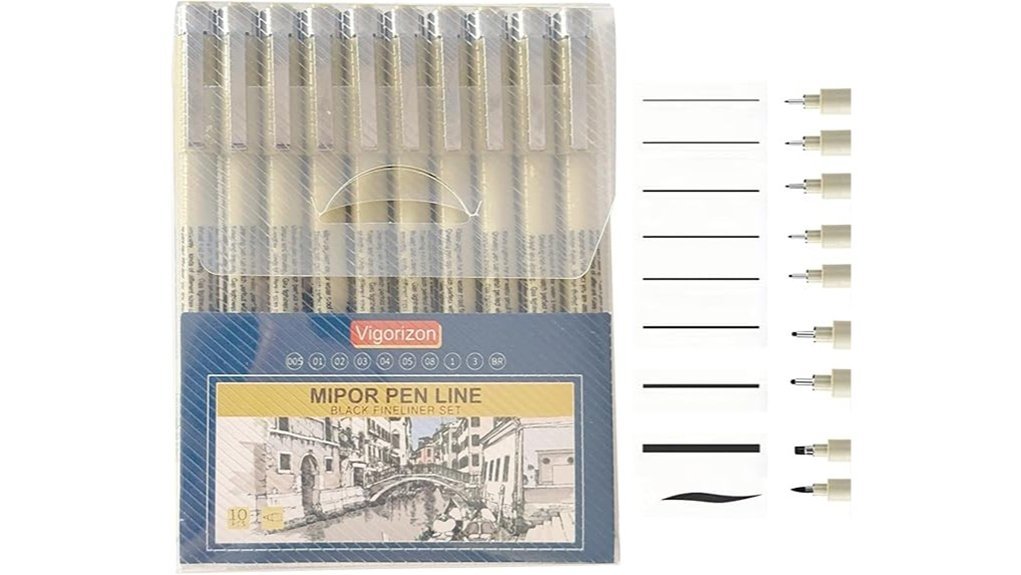
I’ve put these MIPOR fineliners through long sketch sessions, and they feel like a steady hand in yours. You get ten nib sizes that move from 005 to 3 plus a brush tip. Each tip gives you clean control over dot density and line weight. Think of it like a piano, each nib hits a different note.
The premium black ink flows smooth and smells faintly inky in a good way. Lines dry fast and stay sharp on paper or glass. Your gradients stay crisp and your stippling stays tight. I like how the ink keeps its tone across layers.
You’ll feel the lightweight barrels right away. The grip stays secure and soft during long sessions. My hand stayed relaxed even after an hour of cross hatching. It feels like holding a well balanced pencil.
You can jump from comics to technical drawing with ease. Bullet journaling feels clean and controlled. The clear case keeps everything visible and ready for travel. It’s a grab and go setup.
Best For: Artists and illustrators who want sharp line control and a wide nib range for detail work and expressive strokes.
Pros:
- Ten nib sizes plus a brush tip give flexible line work options
- Waterproof black ink stays consistent for clean results
- Lightweight design supports long drawing sessions with comfort
Considerations:
- Black ink focus suits monochrome work best
- Large fill areas call for broader tools like markers
- Felt tips respond best with light pressure for longer life
If you enjoy precise ink work, this set hits the sweet spot. It feels dependable and gives you control right where it counts.
Shuttle Art 18-Pack Micro-Line Pens Set
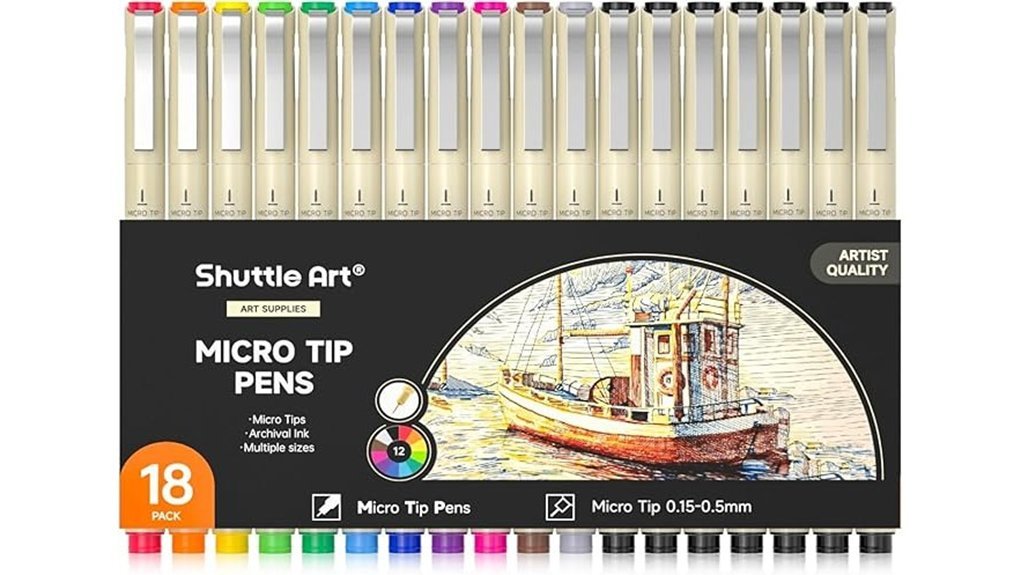
Artists who need versatile line control will feel right at home here. I tested these on smooth Bristol and rough sketch paper. Each stroke felt crisp and steady. You get 18 micro-line pens with archival ink. Eleven pens bring color at 0.3 mm. Seven black pens range from 0.15 to 0.5 mm. I switched from tiny stipples to bold accents in seconds. It felt like shifting gears in a well tuned bike.
The ink glides with a soft scratch on paper. Lines stay sharp and clean. Pages look neat with no bleed or feathering. Waterproof and fade-resistant, your work holds up over time. Each pen shows its size and color. You grab the right one fast. The pouch keeps things tidy and ready to go. A 30-day return gives you room to try them out.
Best For:
Artists and illustrators who want precise line work. Students who sketch daily. Technical users who need clean diagrams.
Pros:
- Smooth ink flow that keeps lines sharp
- Wide range of tip sizes for detail and depth
- Colored and black options for flexible sketches
- Archival ink that lasts and stays bold
Cons:
- Colored pens come in a single 0.3 mm size
- Brand feels less known than premium names
- Pouch works fine though heavy use may wear it out
Brusarth Black Fineliner Micro-Pen Set (9-Pack)
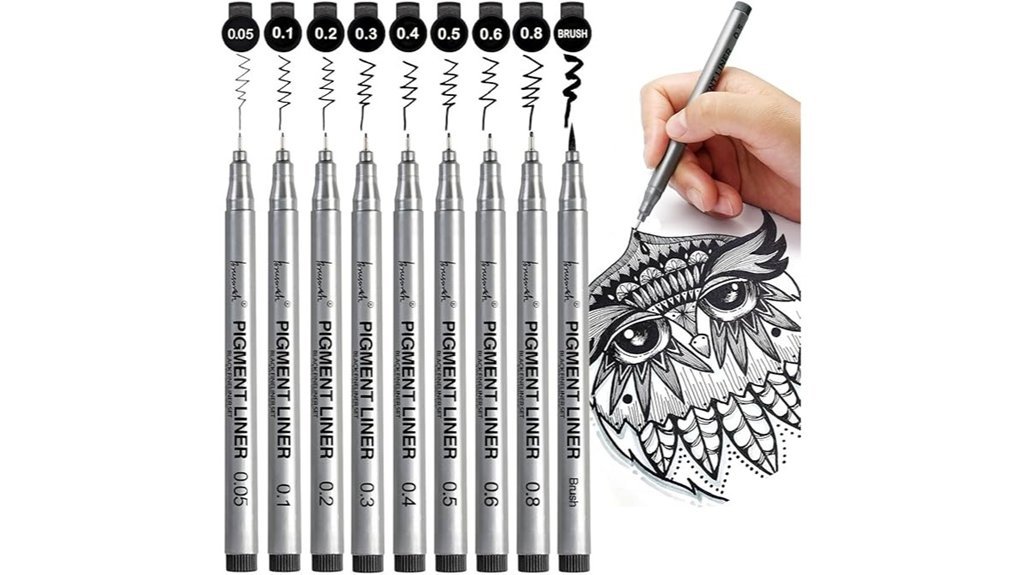
I’ve used this set on sketch paper and smooth Bristol. It feels like a Swiss army knife for ink work.
You get nine tip sizes. Each one hits a clear use case. I switch fast during stippling sessions. The 0.2mm tip lays down tight dots. The brush tip adds soft fills that feel like a whisper on paper.
The pigment ink dries fast and feels clean. It smells faint and neutral. Lines stay sharp after water hits them. Colors stay deep over time.
The pens feel light in hand. Caps click with a crisp snap. The coded caps and pocket clips keep your kit tidy. You grab the right size without guesswork.
This set suits both practice and serious drafts. Beginners get control fast. Pros get range in one pack. It hits the ground running.
Best For: Artists and illustrators who want precise control for stippling, journaling, and technical drawing.
Pros:
- Nine tip sizes cover fine lines and bold marks
- Brush tip adds soft fills with smooth flow
- Archival pigment ink stays waterproof and fade resistant
- Coded caps speed up selection and storage
Cons:
- Black ink only so color work needs extra pens
- Felt tips soften with heavy pressure over time
- Brush tip feels firmer than premium brush pens
If you want crisp dots and clean lines, this set delivers. It’s a steady hand in your pocket.
Factors to Consider When Choosing a Pen for Stippling
Pick the Right Pen for Stippling
I’ve tested a pile of pens on real paper. Some scratch. Some glide. You feel the difference fast.
Tip size drives control. Fine tips give tight dots. Lines stay sharp. Your page looks clean. Think needle point precision, like tapping a drum with a single stick.
Ink flow shapes every mark. Smooth flow feels silky on the page. No skips. No blobs. You hear a soft whisper as the tip moves.
Speed matters in long sessions. A good pen keeps pace with your hand. You build tone with steady rhythm. Like a metronome for dots.
Grip keeps you going. I like a soft barrel that hugs my fingers. Less strain. More focus. Your hand stays relaxed after hours.
Dry time protects your work. Fast drying ink locks each dot in place. No smears. Your highlights stay crisp.
Quick specs to check before you buy:
- Tip size, 0.1 to 0.5 works best for detail
- Pigment ink, it resists fading
- Consistent flow, no hard starts
- Comfortable grip, rubber or matte plastic
- Quick dry formula, clean pages
Pick a pen that feels right in your hand. Your art will follow.
Tip Size Precision
Tip Size Precision
I’ve tested tip sizes on smooth paper and rough stock. The feel shifts fast. *Tip size drives every dot you place.*
Start fine. A 0.20 mm tip feels like a needle on paper. You hear a soft scratch as it lands. You gain tight control. You build smooth gradients with ease. Think of it as a violin string, precise and light.
Go bigger for impact. A 0.50 mm tip lays down bold dots. A 1.0 mm tip hits like a drum. Ink feels wetter on contact. You fill shadows fast. Contrast jumps off the page.
Switch tips as you work. I do this in every session. You lay a base with a larger tip. Then refine with a finer tip. The result feels *layered and alive*.
Dry time shifts with size. Small dots set fast. Larger dots feel tacky for a beat. Give them a moment. Your paper will thank you.
Quick guide you can scan:
- 0.20 mm, fine detail, smooth gradients, light touch
- 0.30 mm, balanced control, mid tone work
- 0.50 mm, fast fills, strong contrast
- 1.0 mm, heavy shadows, bold texture
Pick with intent. You shape depth and rhythm with each dot. It’s like cooking with heat, low for finesse and high for sear.
Ink Flow Consistency
Ink Flow Consistency
I’ve tested dozens of pens, and ink flow makes or breaks stippling. Think of it like a steady heartbeat. You want rhythm.
A smooth pen feels quiet on paper. You hear a soft scratch. You see clean dots form one by one.
Why it matters
- Even flow keeps dot size stable
- Steady delivery builds smooth gradients
- Clean ink prevents drag on the page
Your pen should feed ink at a steady pace. You get crisp dots each time. No surprises.
I reach for archival ink pens for long sessions. They smell faintly chemical yet clean. They lay down a reliable line. You stay locked in.
Tip design plays a big role. Stainless steel micro tips guide the ink with control. You feel a light glide under your fingers. Each dot lands sharp.
Quick drying ink helps during layering. The surface stays dry to the touch. Your hand moves freely across the page.
Some pens react to pressure. A gentle press gives a slightly richer dot. Control stays in your hands.
What to look for
- Archival ink for stable flow
- Micro tip for precision dots
- Fast dry formula for clean layers
- Balanced pressure response
When flow stays predictable, your focus sharpens. You place each dot with intent. The pattern grows like a well kept rhythm section.
Dotting Speed Control
Dotting Speed Control
Your rhythm sets the pace. Your pen must match it. I felt this fast when ink started to pool on cheap tips. You want *tight control* and clean dots.
A good pen reacts the moment you move. It feels smooth in your grip. You hear a soft tap as each dot lands. That feedback keeps your flow steady.
Speed shapes everything. Slow strokes build soft shading. Fast taps create bold texture. Think of it like a drummer finding the beat.
Electric dotting pens raise the ceiling. I tested models that move ten times faster than hand tools. They buzz lightly and stay cool in your hand. That speed saves hours on dense work.
Still, speed alone means little. You need balance. Your tool should match how you work on a normal day.
Focus on these points:
- Tip response and ink flow
- Grip comfort during long sessions
- Motor stability for electric pens
- Noise level and heat buildup
I always switch speeds during practice. It trains your hand and eye together. You gain control over tone and depth.
Pick a pen that keeps up with you. It should feel like an extension of your hand. That harmony keeps your dots sharp and your style growing.
Grip Comfort Design
Grip Comfort Design
Long sessions test your hand fast. I’ve felt the burn after an hour. *Grip comfort keeps you steady.*
You want a pen that feels right from the first touch. The barrel should sit soft in your fingers. A faint rubber smell hints at quality grip. The surface feels slightly tacky and secure. *That grip stays put like glue on glass.*
Ergonomic barrels shape your hold. They guide your fingers into a natural angle. You gain control with less effort. Your dots land clean and even.
Lightweight builds help a lot. I notice less wrist drag over time. You keep speed and flow with ease. Fatigue fades into the background.
Texture matters more than you think. Smooth yet grippy works best. Your skin slides just enough for micro moves. You keep precision during tight work.
Pick a contour that fits your hand. Small hands need slimmer barrels. Larger hands like a fuller grip. This match boosts comfort and accuracy.
Focus stays on your art. Your grip stays consistent. Sessions feel fluid and calm. *It feels like your pen disappears in your hand.*
Key features I look for:
- Ergonomic barrel shape
- Anti slip grip surface
- Lightweight body
- Balanced weight distribution
- Skin friendly materials
Good ergonomics pay off over time. You see cleaner patterns. You feel fewer breaks in flow.
Ink Drying Speed
Ink drying speed sets the pace. I feel it the moment the tip hits paper. The ink should feel light and dry fast.
Fast drying ink keeps dots sharp. Your hand glides without drag. Each dot stays crisp like fresh sand.
I trust quick set ink for clean layers. You build depth without blur. The page stays tidy and clear.
*Pigment based ink* dries fast and feels smooth. It smells faint and clean. Dye ink feels wetter and softer.
Archival ink sets even faster. It bonds to paper with a firm bite. That grip keeps every dot in place.
Matte finish helps your eyes. Light stays soft on the page. You spot each dot with ease.
Humidity changes the game. Thick air slows drying. Quick ink cuts through that like a hot knife through butter.
Here is what I look for in a stippling pen
- Fast dry time, under a few seconds
- Pigment ink, rich and dense
- Matte finish, low glare
- Consistent flow, smooth touch
Choose a pen that dries fast. You gain control with every mark. Your art stays clean and sharp each time you work.
Line Fade Resistance
Line Fade Resistance****
Fast drying helps you place dots fast. Fade resistance keeps them alive. I’ve seen cheap ink turn gray in months. Good ink stays deep and rich.
Light hits the page every day. Air moves across the surface. You want lines that hold color through both. Think of it like sunscreen for your art, it shields every dot.
Go with *archival ink*. It feels smooth on paper and smells faintly earthy. That formula locks pigment in place. Your work keeps its tone for years.
I trust *pigment based ink* over dye. Pigment sits on the page with grit you can feel. Dye sinks in and shifts over time. Pigment stays bold and clear.
Water matters too. A stray drop can blur soft ink. Pick *waterproof pens* so each dot stays crisp. I’ve splashed a page before, the right ink held firm.
Paper health counts. Look for *pH neutral ink*. It keeps paper strong and slows color shift. Your lines age with grace instead of decay.
Here’s what I check every time:
- Archival quality label
- Pigment based formula
- Waterproof rating
- pH neutral balance
With the right pen you build layers with confidence. Early dots stay sharp as you add more. Contrast stays strong. Subtle tones stay true. Your piece ages like fine wine.
Pen Durability Build
Pen Durability and Build
I’ve tapped pages for hours, weak pens show it fast. A solid barrel keeps every dot tight and clean. You feel the difference right away. No flex, no drift. *Like a drummer keeping perfect time.*
Lightweight metal wins here. Aluminum feels cool in your fingers. It stays strong through long sessions. Your hand stays fresh. That balance matters.
Grip changes everything. I look for a soft, slightly tacky surface. Your fingers stay locked in place. Control stays sharp. Small slips fade away.
Tip quality decides your flow. Stainless steel glides with a soft scratch sound. High grade plastic feels smooth and steady. Ink lands right where you want it.
I always check wear resistance. Cheap pens fade fast. Good ones keep going. Ink flows clean with each tap.
What I check first
- Barrel strength and zero wobble
- Weight balance in hand
- Grip texture and comfort
- Tip material and ink flow
- Long term wear resistance
A strong pen saves cash and stress. You keep creating instead of replacing. That’s the real win.
Versatility Of Use
A versatile pen opens doors fast. I’ve tested these on paper that feels like silk and on rough stock that scratches back. *That soft drag you feel on the nib tells you everything.* You switch from stippling to clean line work in seconds. No tool swap, no break in flow. Like a Swiss army knife for artists.
You want options in nib size. I reach for ultra fine tips for tight dots. Then I grab a broader tip for smooth shading. Control stays in your hand. Lines stay sharp.
- Nib sizes, ultra fine to medium
- Ink types, pigment and dye
- Compatibility, paper and mixed media
Ink quality matters. You smell that faint chemical note in fresh ink. It fades as it dries. Good ink dries crisp and holds color. It stays waterproof and fade resistant. Your work keeps its bite over time.
Ergonomics count more than you think. I’ve held pens that feel like sandpaper after an hour. A good grip feels soft and steady. Your hand stays relaxed. Pressure stays even. Detail gets cleaner.
Look for archival ink if you sell or display work. Colors stay true for years. Paper stays clean. You build pieces that last.
A pen that adapts keeps you in the zone. You move from sketch to final without friction. Ideas flow like a well tuned engine. You stay focused on the art, not the tool.
Conclusion
You’ve felt how each pen shapes your dots. I’ve tested them on rough paper and smooth Bristol. Some glide with a soft whisper. Others bite the page with a crisp scratch.
Pick what fits your hand and pace. *Precision pens* give tight clean dots. *Comfort grips* keep your fingers fresh. *Versatile nibs* handle light taps and firm presses. It’s your call.
I lean on a few standouts after long sessions.
- Micron fineliners for consistent ink flow
- Rotring Isograph for sharp technical dots
- Faber Castell Pitt for rich dark tones
Each tool feels like a different brush in a painter’s kit. You hear the rhythm build as dots stack up. Ink smell lingers. Paper texture guides your hand.
Skill grows with reps. Your patience sets the pace. Each dot lands like a small drumbeat. Keep going and the image appears.
Choose a pen that feels right. Trust your grip. Build your own *constellation of marks*.