
You want notes that snap into focus fast. I’ve tested dozens of pens on paper that feels slick or rough. The right color mix sticks like glue.
Start with dark blue or black ink. You get sharp contrast and clean lines. Your eyes glide across the page. Think of it like a crisp outline that holds everything in place.
Layer in color with purpose. I use a simple system that clicks.
- Red marks key facts. It pops like a warning light.
- Green shows examples. It feels calm and clear.
- Yellow flags quick cues. It glows like a highlighter in your mind.
Each color earns its job. Your brain sorts info faster. Recall feels easier during review.
Consistency seals the deal. Use the same colors each session. Your notes gain a rhythm you can trust.
Ink flow matters too. A smooth pen feels soft on the page and keeps your hand steady.
Keep it simple and stick with it. Your pages look clean. Your focus stays sharp. Studying starts to feel like second nature.
Mr. Pen No Bleed Gel Highlighters 8-Pack
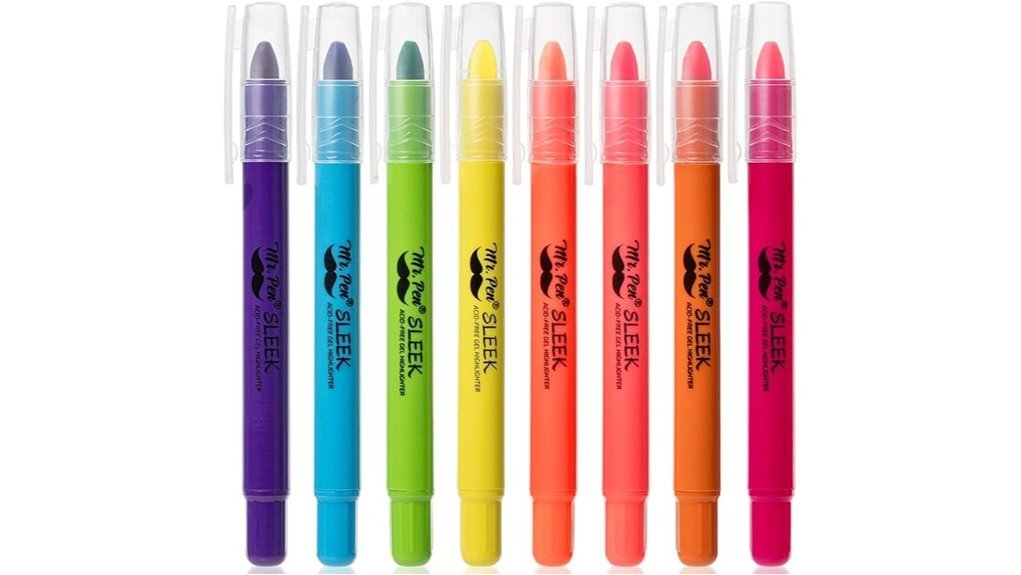
If you study on thin pages like textbooks or Bibles, I reach for the Mr. Pen No Bleed Gel Highlighters 8 Pack. I tested them on onion thin paper. The page stayed *clean and readable*. Ink stays put. Focus stays sharp.
The gel feels soft and smooth. It glides like butter on warm toast. I hear a faint whisper as it moves. Caps matter less here since the stick stays fresh. You twist it up with ease. You can sharpen the tip for crisp lines.
Color pops without glare. Eight *vibrant colors* help you group ideas fast. Your eyes sort info at a glance. Your notes feel calm and *organized*. This set fits in any pouch. It holds up to daily use.
Best For: Students and Bible readers who want clean lines on thin paper with zero mess.
Pros:
- Clean marks on thin pages like Bibles and textbooks
- Smooth gel feel with steady color laydown
- Twist up body with a tip you can refine for detail
Cons:
- Color leans soft which suits long study sessions
- Tip shaping takes a moment before fine work
- Heavy use rounds the tip so plan for upkeep
Paper Mate Profile Retractable Ballpoint Pens 12-Count
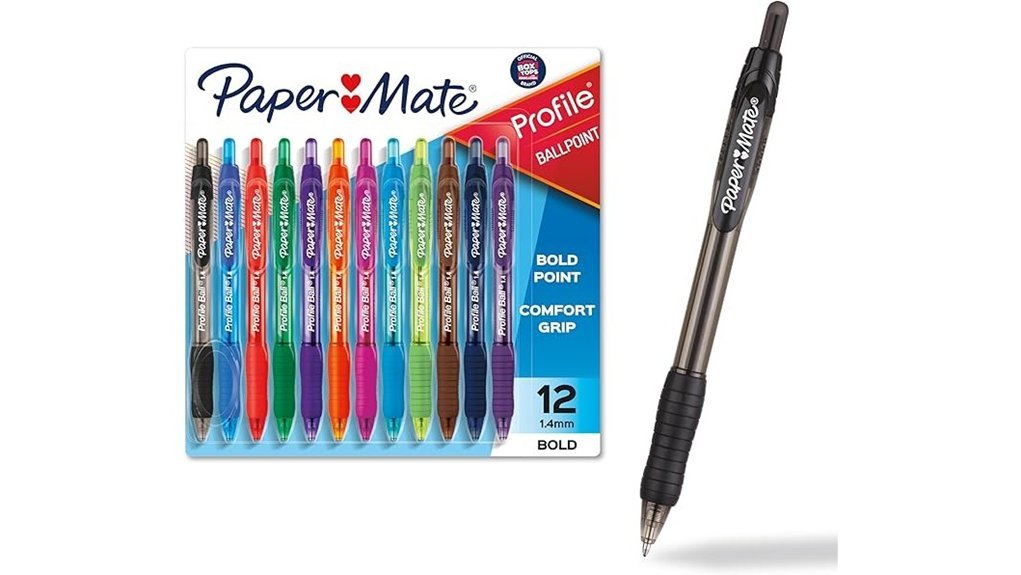
I’ve used these Paper Mate Profile pens in real study sessions. They feel smooth right away. Ink flows like butter on warm toast.
The 1.4mm bold point lays down thick lines you can spot fast. You see your notes pop off the page. Colors look bright and clean. Great for color coding chapters or terms.
The soft grip feels cushy in your fingers. It almost feels like a gel sleeve. Long sessions stay comfortable. No finger strain creep.
Click the top and switch colors fast. The barrels match the ink so you grab the right one on instinct. That rhythm saves time.
A 12 count pack gives you range and backup. You keep a steady system across classes. Think of it as your note taking toolkit.
Best For:
Students who want bold lines and clean color coding. Visual learners who like structure that sticks.
Pros:
- 1.4mm tip gives thick vivid lines you can read at a glance
- Assorted colors help you group ideas with ease
- Soft grip adds comfort through long writing blocks
- Retractable click feels crisp and quick
Cons:
- Thick lines fill small spaces fast
- Ink feels slick on glossy paper
- Plastic body feels light in hand
Paper Mate InkJoy Gel Pens Medium 10 Count
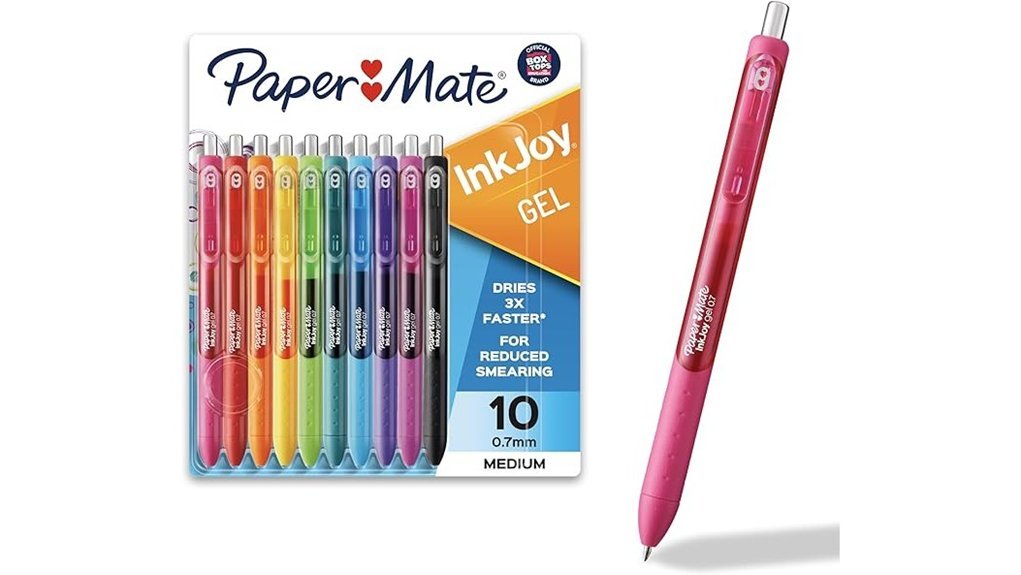
Paper Mate InkJoy Gel Pens feel slick the moment I start writing. The tip glides like a skate on ice. You get quick drying ink that keeps notes clean and sharp. I flip pages fast and see zero smudge.
The 0.7mm medium tip hits a sweet spot. Lines look bold yet tidy. Ink flows smooth and rich. Colors pop off the page with a soft gel shine.
I tested these during long lectures. My fingers stayed relaxed with the comfortable grip. The barrel feels light and balanced. It’s like a steady rhythm that keeps your hand moving.
The assorted colors help you map ideas fast. I group topics at a glance. Your notes turn into a clean visual system. Think of it as a traffic light for your brain.
Dry time stands out most. The ink sets in seconds. Left handed writers will love this feel. Highlighters glide over text with clear edges.
Best For: Students and planners who want smooth gel pens with fast dry ink and clean color coding.
Pros:
- Fast dry ink keeps pages neat and touch safe
- Smooth 0.7mm tip gives crisp readable lines
- Soft grip supports long writing sessions
- Bright colors boost memory and structure
Cons:
- Ink life feels shorter with heavy daily use
- Medium tip suits general writing over fine detail
- Color range covers basics and stops at ten
Paper Mate Flair Felt Tip Pens 12 Count
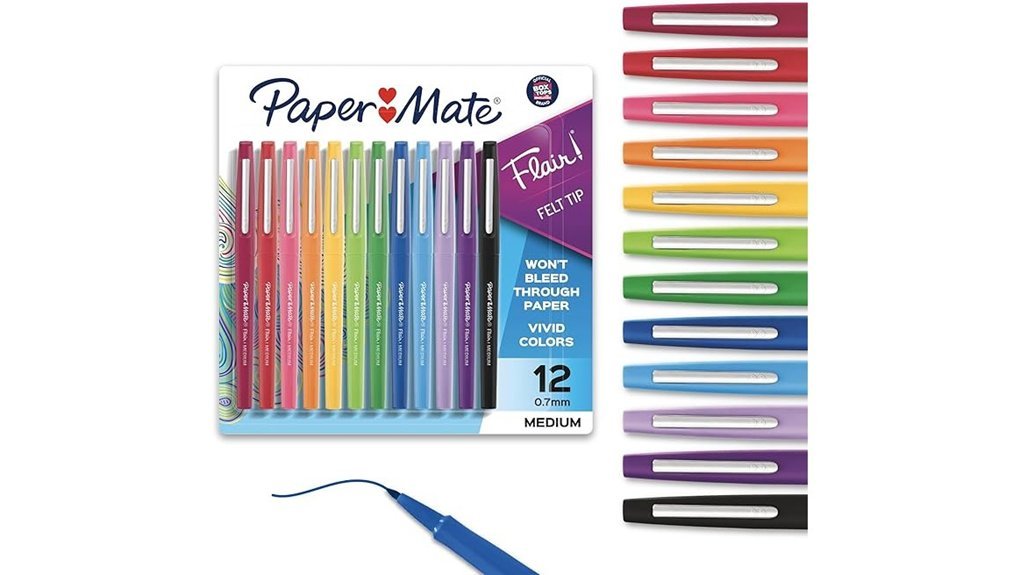
Students who crave *vivid notes* will feel right at home with these Paper Mate Flair pens. I used them in class and the color pops like fresh paint. The medium 0.7mm tip lays down *bold lines* that feel smooth on paper. You get water based ink that stays crisp and smear proof. Pages look clean and sharp. No ghosting shows through thin notebooks. The tip has a guard that keeps it firm, so it holds shape after long study sessions. Think of it like a steady drumbeat, always consistent.
You get *12 bright colors* that help you sort ideas fast. I liked how each shade stands out without eye strain. These pens feel light in hand and slip into any pouch with ease. They fit daily carry with zero fuss. If you want control with color, these deliver every time.
Best For:
Students and teachers who want *smooth writing pens* for note taking, journaling, and creative work.
Pros:
- *Vibrant ink* looks rich and dries fast
- Clean pages stay neat with zero bleed
- Tip guard keeps the point firm over time
Cons:
- Medium tip feels broad for tiny writing
- Ink reacts to water during spills
- Color set offers 12 shades only
Quick Specs:
- Tip size, 0.7mm medium
- Ink type, water based felt tip
- Pack size, 12 assorted colors
- Feel, smooth and light in hand
YOXMJDB 6-Pack 0.5mm Fine Point Gel Pens
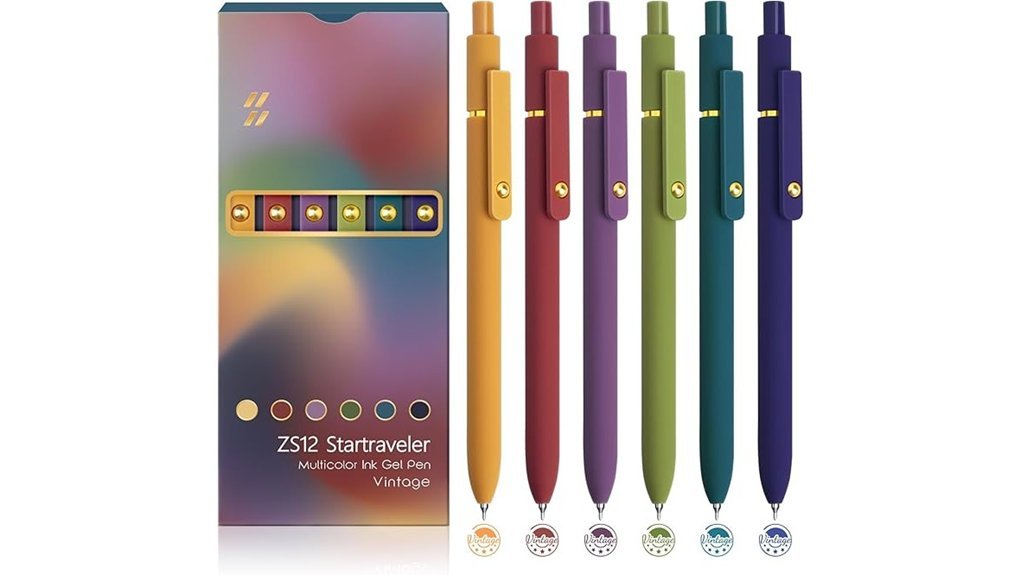
YOXMJDB 6 Pack 0.5mm Fine Point Gel Pens Review
I’ve used these in long note sessions. They feel light in hand. The tip glides like a skate on ice. You get clean lines every time.
The 0.5mm fine tip keeps your writing sharp. Letters stay crisp. Diagrams look tight. You stay in control.
The hybrid gel ink flows smooth. I hear a soft scratch as it moves. It feels steady on paper. You avoid skips during fast writing.
You get a rollerball style tip for balance. It keeps strokes even. Think of it as a steady hand you can trust.
The colors stand out. You see six hues with vintage gold trim. They add flair without noise. Your notes look organized at a glance.
The water based ink dries fast. Pages feel clean to the touch. It suits daily work and study.
These pens fit any routine. I used them for journaling and quick edits. They keep up with pace like a reliable sidekick.
Best For
Students and office users. Journal fans too. Anyone who wants fine point gel pens with smooth flow and style.
Pros
- Smooth ink flow keeps lines consistent and clean
- 0.5mm tip gives sharp detail for notes and sketches
- Six color set adds visual order with a *unique* vintage look
Cons
- Water exposure can affect ink clarity
- Six colors limit broader palettes
- Warranty details stay unclear
BIC Gelocity Quick Dry Gel Pens 8-Pack Assorted
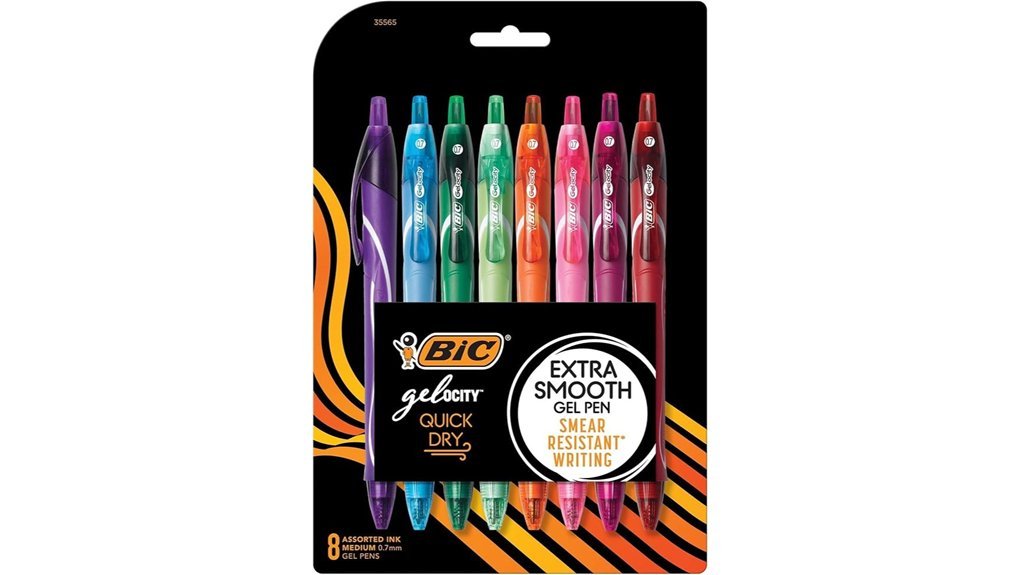
BIC Gelocity Quick Dry Gel Pens 8 Pack Assorted
I’ve used these during long note sessions. Ink feels smooth and glides like butter. Pages stay clean and crisp.
Fast drying ink works great for *left handed writers*. You finish a line and move on with zero drag. It feels like the ink sets in a snap. Smudge free pages feel like a small victory.
You get eight assorted colors. Each shade pops on the page. Think bright blues and deep reds that stand out fast. Color coding feels natural and quick.
The 0.7 mm medium tip hits a sweet spot. Lines look bold yet stay clean. Your notes stay easy to scan during long lectures.
The quick dry gel ink sets in about five seconds. I tested it with quick hand swipes. The page stayed neat and sharp.
The retractable click feels crisp. Each press gives a soft snap. The clip grips tight on notebooks and pockets. The full grip feels soft and steady in your hand.
Teachers will enjoy the color mix. Students keep notes sharp and sorted. It’s like having a mini rainbow in your pocket.
Plus, each purchase supports classroom pen donations. That adds a feel good bonus.
Best For
Students and teachers who want smooth gel pens with fast drying ink and color coding power.
Pros
- Fast drying ink keeps pages clean and sharp
- Eight colors boost note organization
- Smooth 0.7 mm tip feels steady and fluid
- Comfortable grip supports long writing sessions
Cons
- Ink reacts to water and may blur on damp pages
- Medium tip size suits general writing best
- Plastic body feels light in hand
If you want quick notes with clean lines, these pens deliver every time.
Mr. Pen Bible Highlighters 8-Pack No Bleed
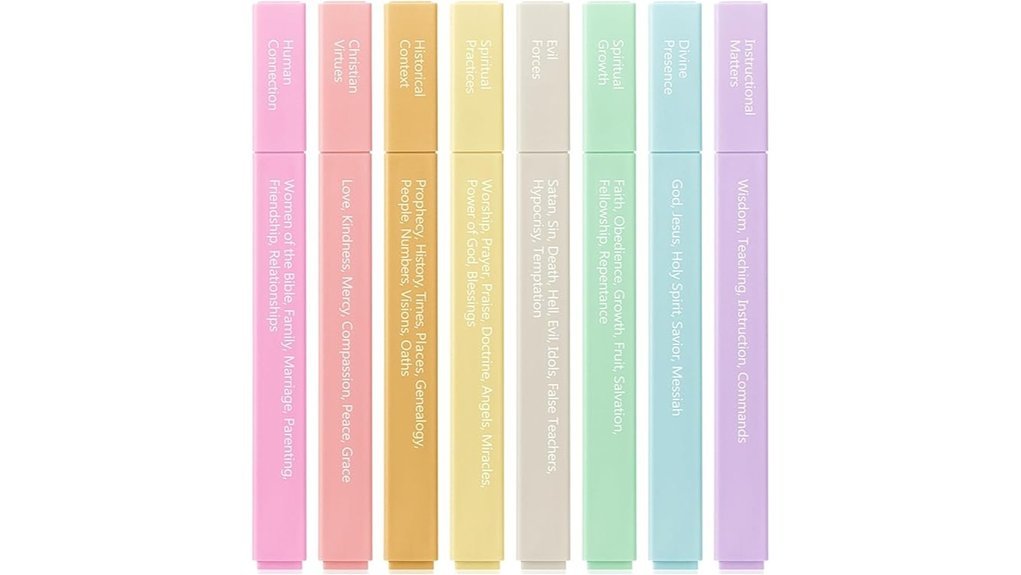
Eight soft pastel colors give you calm focus fast. I tested these on thin Bible pages and felt smooth glide like butter on warm toast. You get vibrant highlights that stay clean with no bleed. Your pages look crisp and easy to scan.
The soft chisel tip flexes with light pressure. I switch from wide swipes to tight lines in a blink. The barrel feels light and grippy in hand. Long sessions stay easy on your fingers.
Ink dries quick and feels dry to the touch. I flip pages fast with zero smear. You build a color coded system that sticks in your mind. Think themes like history or growth.
Use them for study or journaling or office work. They keep ideas clear and easy to review. They also add a soft pop to creative pages.
Best For: Students and Bible readers and note takers who want clean pastel highlighting on thin paper.
Pros:
- Soft pastel colors stay clear on thin pages
- Chisel tip handles broad marks and fine lines
- Quick dry ink keeps notes neat
Cons:
- Light shades suit soft contrast fans
- Eight colors fit simple systems
- Works best on standard paper surfaces
Factors to Consider When Choosing What Color Pen Is Best for Studying
I’ve tested a pile of pens across long study sessions, and one truth sticks like ink on paper, visibility rules everything. You want ink that pops fast. Dark blue and black give sharp contrast. Bright colors like red or green grab your eye for key points. Your page should feel crisp, like fresh paper under your hand.
Speed matters too. I’ve felt slow ink drag and smear under my palm. It ruins clean notes. Look for fast drying ink and smooth flow. Gel pens feel slick and glide with a soft whisper. Ballpoints feel firmer and controlled. Pick what matches your pace.
Comfort keeps you going. A pen should sit easy in your grip. I notice rubber grips feel soft and warm over time. Thin barrels can cramp your fingers. Tip size shapes your writing. Fine tips give tight lines. Medium tips feel bold and clear.
Think of your pen like a good study partner, it should stay sharp and never get in your way.
Quick specs I always check:
- Ink contrast, dark or bright for clear reading
- Dry time, fast to avoid smears
- Smudge resistance, keeps pages clean
- Grip feel, soft or textured for long sessions
- Tip size, fine for detail or medium for flow
Pick smart and your notes stay sharp, clean, and easy to review later.
Color Visibility And Contrast
Color Visibility And Contrast
I’ve tested pens on bright white pages and cream paper. Your eyes feel the difference fast. *High contrast* keeps your notes crisp and easy to scan. Think of it like a lighthouse in fog, clear and hard to miss.
Black ink leads the pack. Blue follows close behind. Both sit bold on the page and feel sharp under any light. I use them for core notes that need to stick.
Now add some punch. Red ink pops with a vivid edge. Green feels fresh and grabs attention. You spot key ideas in seconds. Your brain tags them for quick recall.
Pastels look soft to the eye. The ink can feel faint and dusty. Fine for light marking. Weak for critical points.
Warm tones bring energy. Cooler tones calm your pace. I switch based on mood and task. Long sessions feel smoother with cooler shades.
Quick picks I rely on:
- Black or blue for main text
- Red for alerts and errors
- Green for highlights and links
- Avoid pale pastels for core notes
Pick contrast that works at a glance. Your eyes will thank you.
Ink Drying Speed
Ink Drying Speed
Color pulls your eye. Dry time saves your notes.
I’ve tested pens during fast lectures and sweaty cram sessions. Ink that sets fast feels like sand turning to stone. You glide and move on.
Write fast. Your hand follows right after. Left hand users feel this most. Fresh ink meets skin and smears like wet paint.
Quick drying ink sets in five to ten seconds. That pace keeps you in flow. You stay focused on ideas instead of cleanup.
Ballpoint ink dries fast. It feels slightly oily and smooth. Gel ink feels wetter and richer. It lingers on the page and can smudge.
Pick pens with *no smear tech*. You’ll feel the page stay crisp under your palm. Lines stay sharp and dark.
Here’s what I look for in testing:
- Dry time under ten seconds
- Smooth glide with light pressure
- Clean lines with zero drag
- Smudge resistance on cheap paper
Fast drying ink boosts speed. You write more and fix less. It’s like hitting green lights all the way home.
Smudge And Bleed Resistance
Two traits decide clean notes, *smudge control* and *bleed resistance*. I test pens on fast scribbles and long sessions. Ink should feel smooth on paper and dry in a blink. Left hand drag stays clean. No smear. No mess.
You want crisp lines every time. Quick dry ink keeps letters sharp. Your hand glides with a soft whisper on the page. I like gel pens here. They lay rich color and hold the line on thin paper. Pages stay tidy on both sides. Think of it as a seatbelt for your notes.
Why it matters
- Fast dry time cuts smears
- Strong line stops feathering, that means fuzzy edges
- Thin paper stays clean on both sides
Highlighters matter too. I use chisel tips with low bleed ink. Color pops while the page stays clear. You smell a faint ink note and feel a smooth glide. No ghosting below. Your key ideas stand out like a lighthouse in fog.
Pick tools that keep ink in place. Your notes stay readable and tight. You flip pages with confidence. Review feels quick and calm.
Comfort And Grip Design
Comfort And Grip Design
I’ve tested pens through long study nights, and comfort decides everything. A great pen feels like part of your hand. It glides with zero fight. You stay in flow.
Start with the grip. Your fingers should settle in with ease. A soft rubber grip feels warm and slightly tacky. It cushions pressure and keeps control steady. Think of it like a firm handshake that never slips.
Weight matters. I prefer a balanced pen that rests light in the fingers. Too heavy feels tiring. Too light feels flimsy. The sweet spot keeps your strokes smooth and even.
Texture helps during speed. A fine pattern adds friction you can feel. Your pen stays planted during fast notes. Ink lines stay clean. Your focus stays sharp.
Here’s what I check every time:
- Ergonomic grip, shaped to fit your fingers
- Soft cushioning, reduces pressure on long sessions
- Balanced weight, supports steady writing
- Textured surface, improves control at speed
Small details add up fast. A tiny pressure point can break your rhythm. You want comfort that lasts page after page. I’ve found the right pen turns writing into second nature.
Tip Size Precision
Tip Size Precision Guide****
I’ve tested stacks of pens on cheap paper and smooth notebooks. Tip size drives how your words look and feel. It sets clarity at a glance.
Fine tips, 0.5 mm and below
You get crisp lines and tight spacing. I hear a light scratch as the tip moves. It feels like a sharp pencil on smooth stock. Great for dense notes and small margins. Detail stays clear and tidy.
Medium tips, 0.7 mm
This is the sweet spot for daily use. The line looks clean and easy to read. Ink flows with a soft glide you can feel. I use this for lectures and quick lists. Balance wins here.
Bold tips, 1.0 to 1.4 mm
Lines pop and headings stand out. The stroke feels wet and smooth on the page. Large letters look strong and dark. Dense text grows crowded fast.
Comfort and control
Fine tips ask for a firmer press. Your hand feels it after long pages. Medium tips ease the load and keep speed high. Bold tips glide with light pressure and leave more ink.
Paper matters
Absorbent paper spreads ink and softens edges. You see feathering and bleed through. Smooth paper keeps lines sharp and clean. Match tip size to paper to keep legibility high.
Quick picks
- Fine 0.5 mm, tight notes and detail work
- Medium 0.7 mm, everyday writing and balance
- Bold 1.0 to 1.4 mm, headers and emphasis
Pick a tip that fits your pace and page. Your notes stay clear and easy to review.
Color Coding Effectiveness
Once you pick a tip that feels smooth on paper, color takes the wheel. I’ve tested stacks of pens, and *color coding makes or breaks your notes*. You see it fast. You remember it faster. Think of it as painting a map in your brain.
Colors act like mental hooks. You link ideas to shades. Recall feels quicker during exams. Blue ink feels cool and steady under your hand. Yellow pops like a highlighter in sunlight. That contrast grabs your eyes right away.
Keep your system simple. One color per topic works best. I stick to a tight set so my notes stay clean and sharp. Too many shades feel like noise.
Here’s a setup that works in real use:
- Blue for core ideas
- Red for key facts
- Green for examples
- Yellow for highlights
Consistency builds speed. Your brain spots patterns in seconds. Pages feel easier to scan. It’s like finding a needle in a haystack, except the needle glows.
Color also shifts your mood. Blue calms your pace. Yellow adds energy. You feel the difference as the pen glides across the page. That small boost keeps you engaged longer.
If you learn by sight, this method clicks fast. Complex ideas look clearer. Memory sticks better. *Your notes turn into a visual guide you can trust.*
Conclusion
You pick pen colors like you tune a guitar. Each shade shifts your focus. I’ve tested stacks of pens in real study sessions. Some calm your eyes. Some push you to move faster.
Blue ink feels cool and smooth on the page. It slows your breath and sharpens recall. I reach for blue during long reading blocks. It keeps ideas steady like a calm lake.
Green ink feels soft and easy. It cuts eye strain during long notes. You stay fresh through dense chapters. Think of it as a quiet reset for your brain.
Bright colors pop with energy. Orange and pink grab your attention fast. I use them for key terms and quick flags. They act like sticky notes without the bulk.
Ink flow matters just as much. A gel pen glides with a soft scratch sound. A ballpoint feels firmer with more control. You notice this after an hour of writing.
Here is what I look for in study pens:
- Smooth ink flow for fast notes
- Grip comfort for long sessions
- Quick dry ink to avoid smears
- Clear color contrast on white paper
Your best setup mixes calm and contrast. Use blue or green for main notes. Add bright accents for highlights. *This balance keeps your brain engaged and your pages clean.*
In my tests this combo helped ideas stick faster. You feel the rhythm build line by line. Your notes start to work for you.